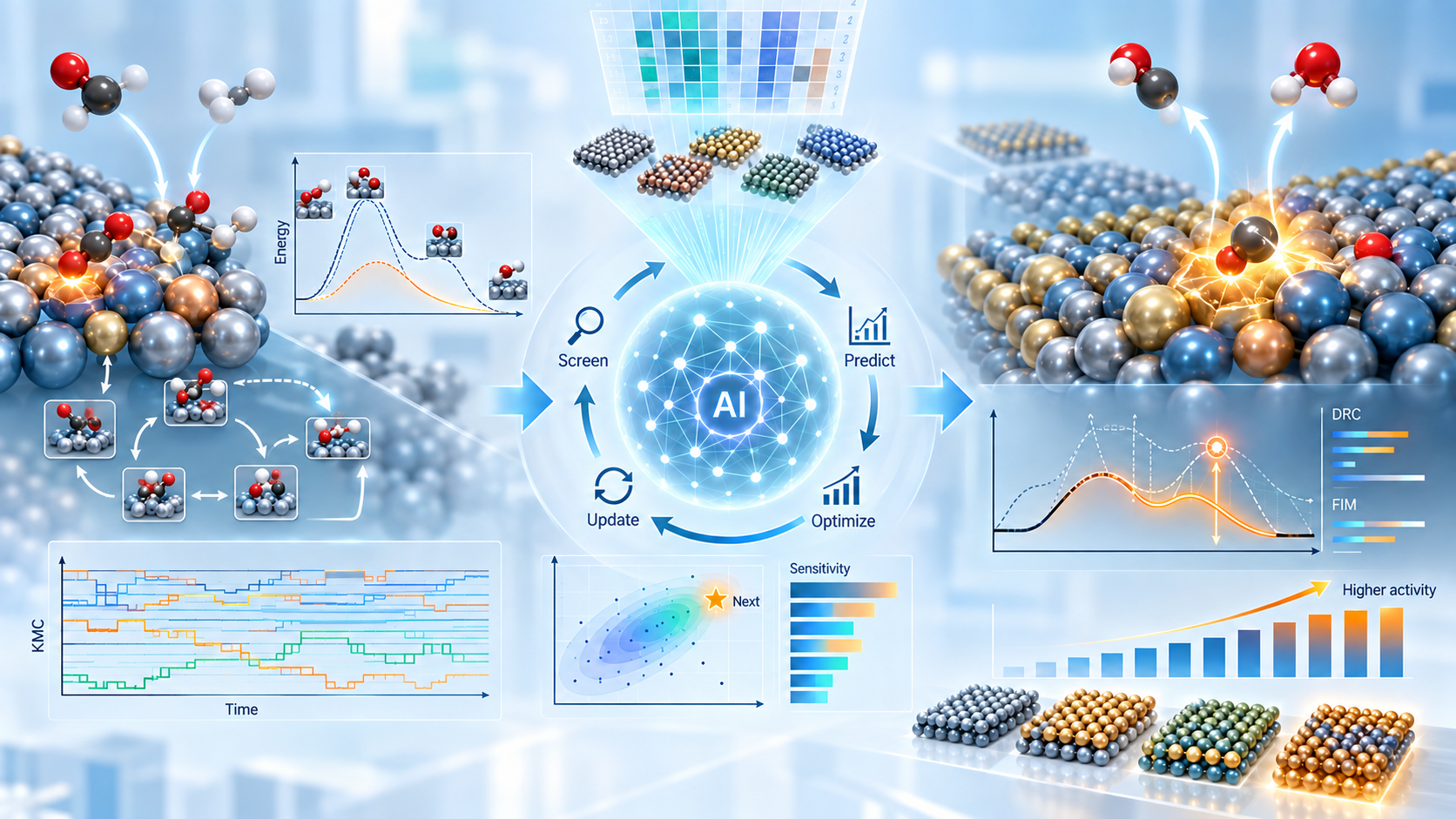
Rational design of catalysts for energy conversion reactions
Research focuses on the rational design of catalysts for energy conversion reactions, with particular attention to the relationships among catalyst surface structures, reaction events, and macroscopic catalytic performance. By integrating first-principles calculations, kinetic Monte Carlo simulations, and machine learning, I aim to develop interpretable frameworks for reaction-event screening and sensitivity analysis, enabling the identification of key steps that govern catalytic activity and selectivity and providing mechanistic guidance for catalyst optimization.
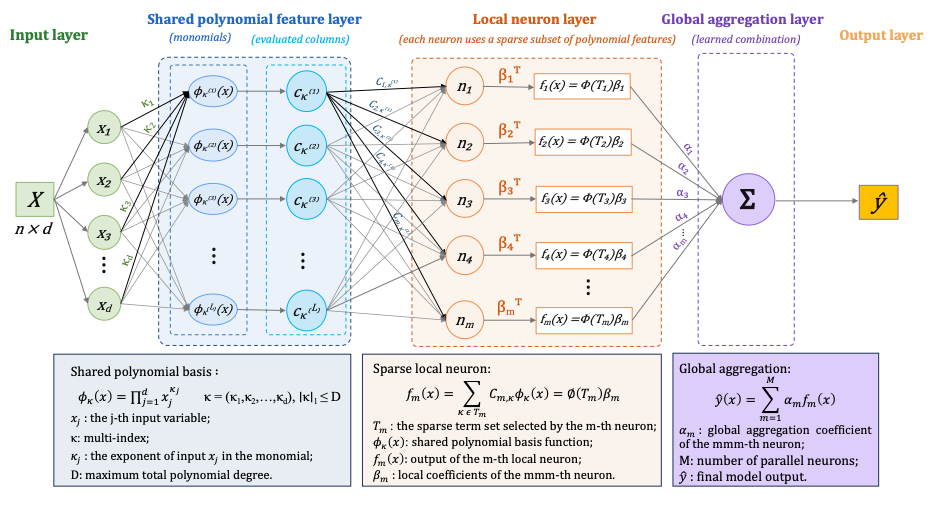
Development of explainable Polynomial Neural Networks and their application to marine protective coatings.
The aim of this research is to develop transparent and interpretable data-driven models for coating degradation and service-life prediction, identify key factors governing long-term performance, and establish clear relationships among material properties, environmental exposure, degradation behavior, and coating durability.
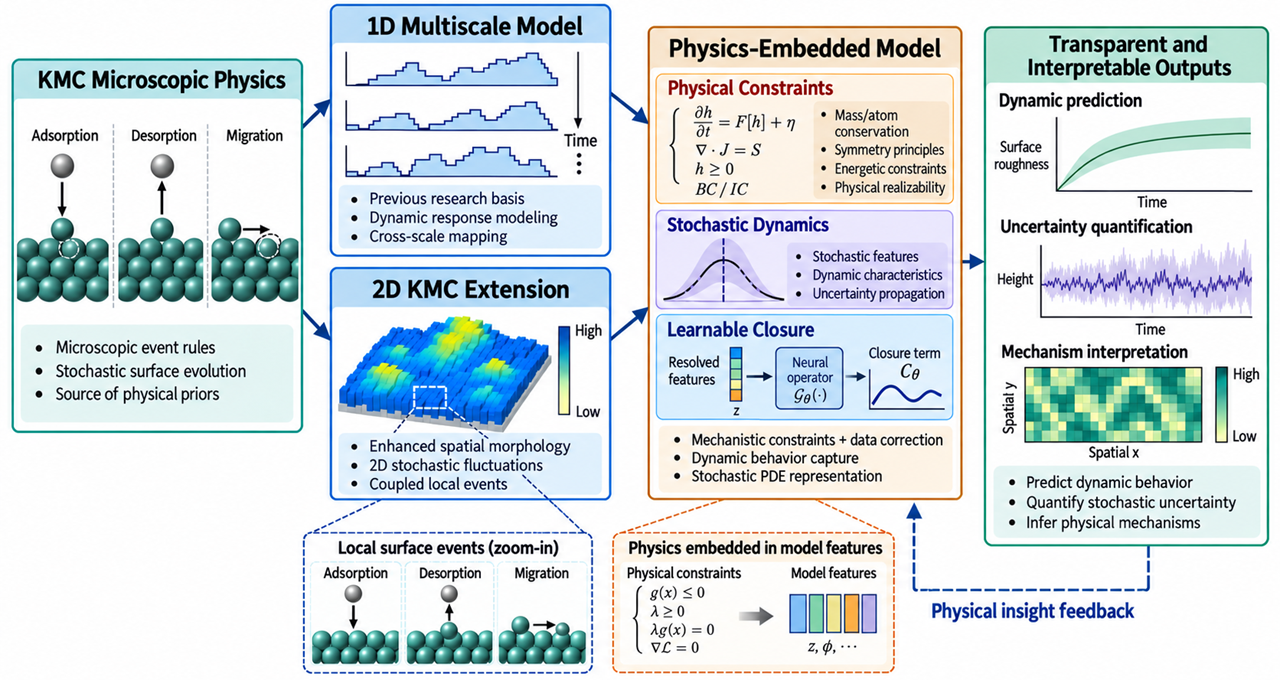
Multiscale modeling, simulation, and optimization methods for complex process systems
Develops multiscale modeling, simulation, and optimization methods for complex process systems, with a particular focus on linking reactor-scale transport phenomena with microscopic stochastic surface dynamics. The work integrates physics-based models, kinetic Monte Carlo simulation, stochastic process modeling, physics-informed machine learning, surrogate modeling, uncertainty quantification, and optimization-based control to describe how operating conditions influence material growth, morphology evolution, and product quality. These methods aim to build computationally efficient and interpretable models that support process understanding, operating-condition design, real-time optimization, and model predictive control for advanced manufacturing and thin-film deposition processes.
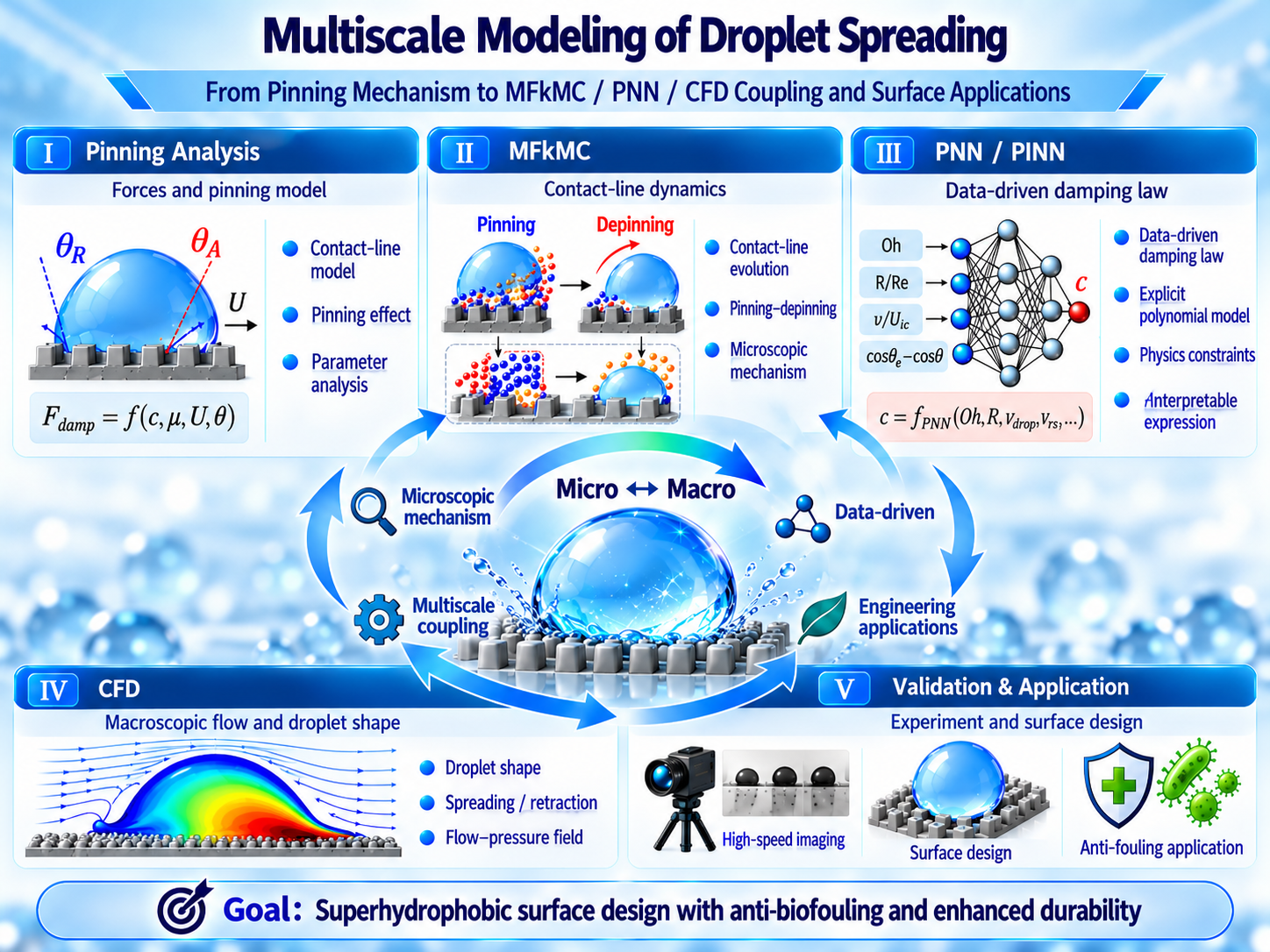
Multi-scale modeling of droplet spreading dynamics on surfaces
This research direction aims to develop an interpretable multi-scale model fordroplet spreading dynamics on solid surfaces by integrating experiments, modeling and simulation. Accordingly, this work seeks to combine the Moving Front kinetic Monte Carlo (MFkMC) method to capture molecular-scale contact line dynamics; computational fluid dynamics (CFD) to resolve the macroscopic droplet shape evolution; and physics-informed polynomial neural networks (PINN/PNN) to predict the force contributions within the droplet. Through the integration of these multi-scale approaches, this work aims to establish a predictive and interpretable framework for droplet spreading and surface hydrophobicity, which can be applied to superhydrophobic surface structure design and functional coatings for biomedical applications.