
2026-09-12
Welcome our new PhD students!
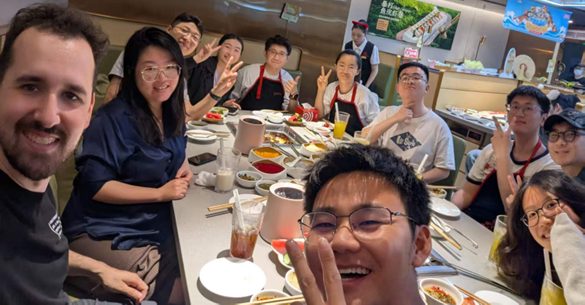
A new SJTU PhD student Guofan Zhang张国藩 joined the group this semester. Welcome aboard!
The Intelligent Multiscale Process Engineering Team at Eastern Institute of Technology, Ningbo (EIT) is a diverse and interdisciplinary research group dedicated to the development and application of advanced multiscale algorithms and artificial intelligence (AI) methodologies in chemical and biomedical engineering.
Recent activities, awards and announcements from our group.
A new SJTU PhD student Guofan Zhang张国藩 joined the group this semester. Welcome aboard!
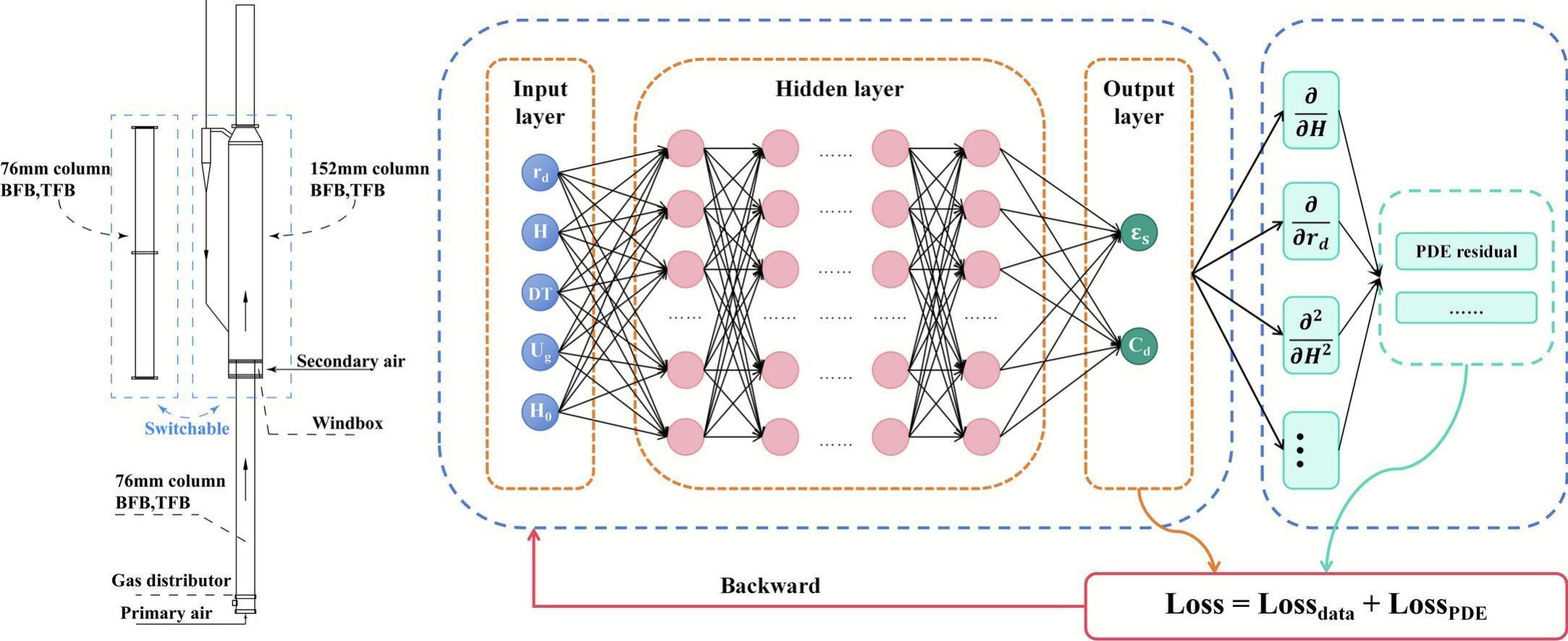
Congratulations to our team's RA Lihui — a study on using Physics-informed Neural Networks (PINN) for modeling gas-solid fluidized beds has been accepted.
3 new SJTU PhD students Xincheng Zhu祝心成, Junxiu Lu卢俊秀, Lei Wang王磊 joined the group this semester. Welcome aboard!
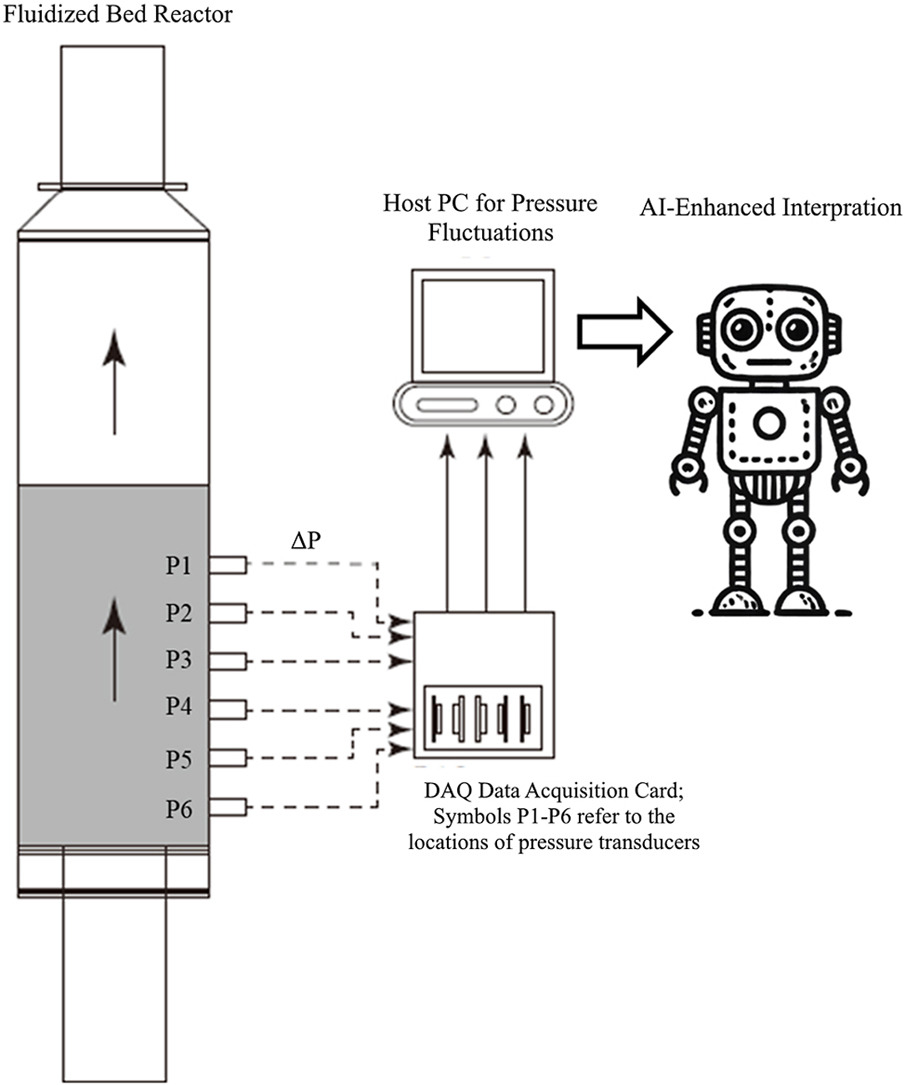
Congratulations to our team's PI Yue Yuan — a review paper on time-series signal processing methods for gas-solid fluidization processes has been accepted.
We combine experiments, modeling and simulation across multiple scales.
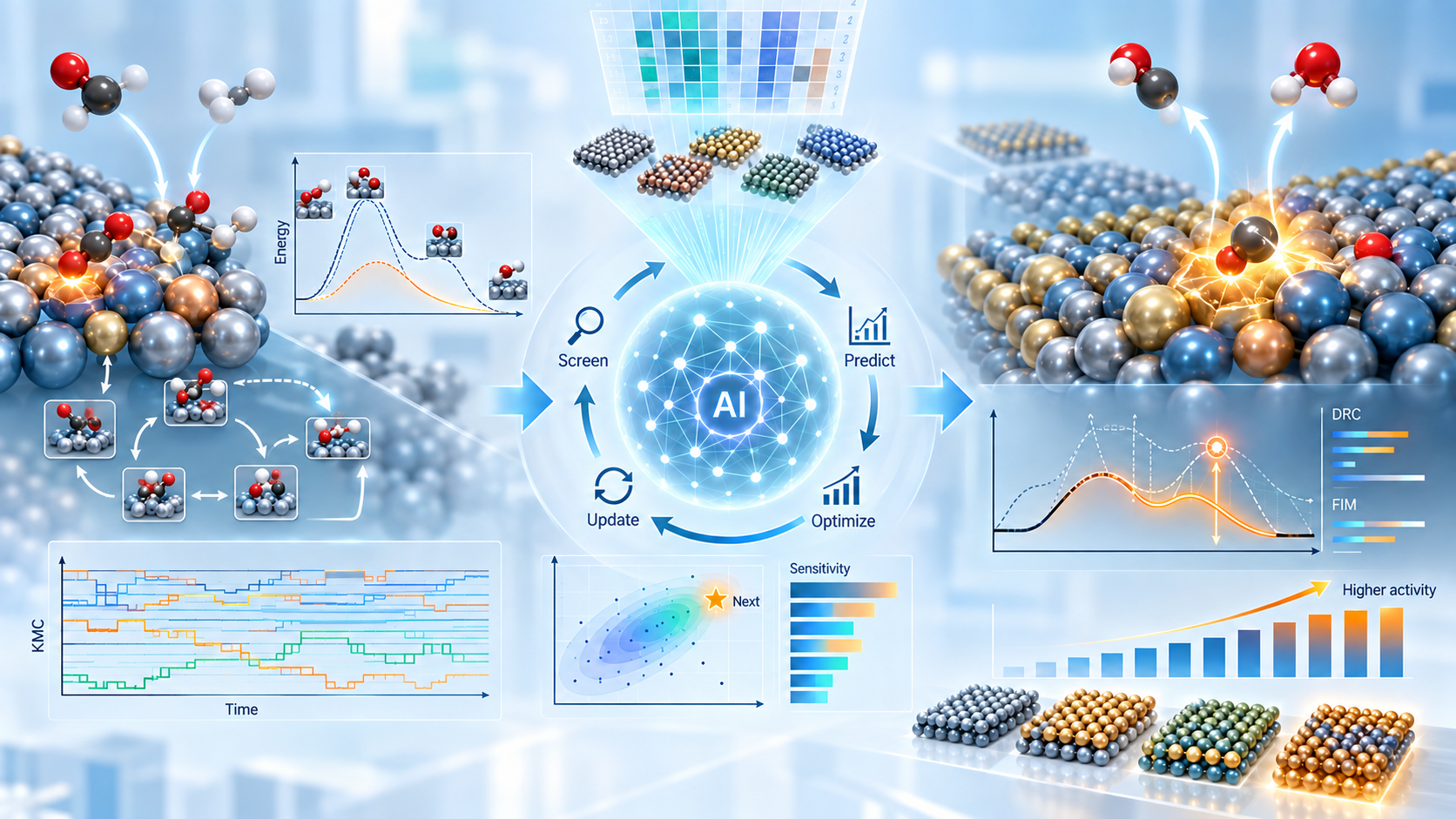
Research focuses on the rational design of catalysts for energy conversion reactions, with particular attention to the relationships among catalyst surface structures, reaction events, and macroscopic catalytic performance. By integrating first-principles calculations, kinetic Monte Carlo simulations, and machine learning, I aim to develop interpretable frameworks for reaction-event screening and sensitivity analysis, enabling the identification of key steps that govern catalytic activity and selectivity and providing mechanistic guidance for catalyst optimization.
The aim of this research is to develop transparent and interpretable data-driven models for coating degradation and service-life prediction, identify key factors governing long-term performance, and establish clear relationships among material properties, environmental exposure, degradation behavior, and coating durability.
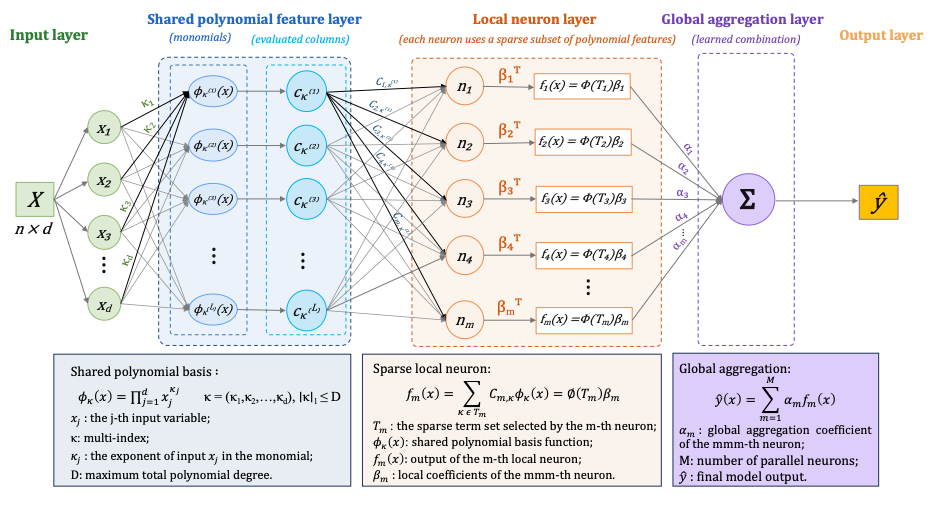
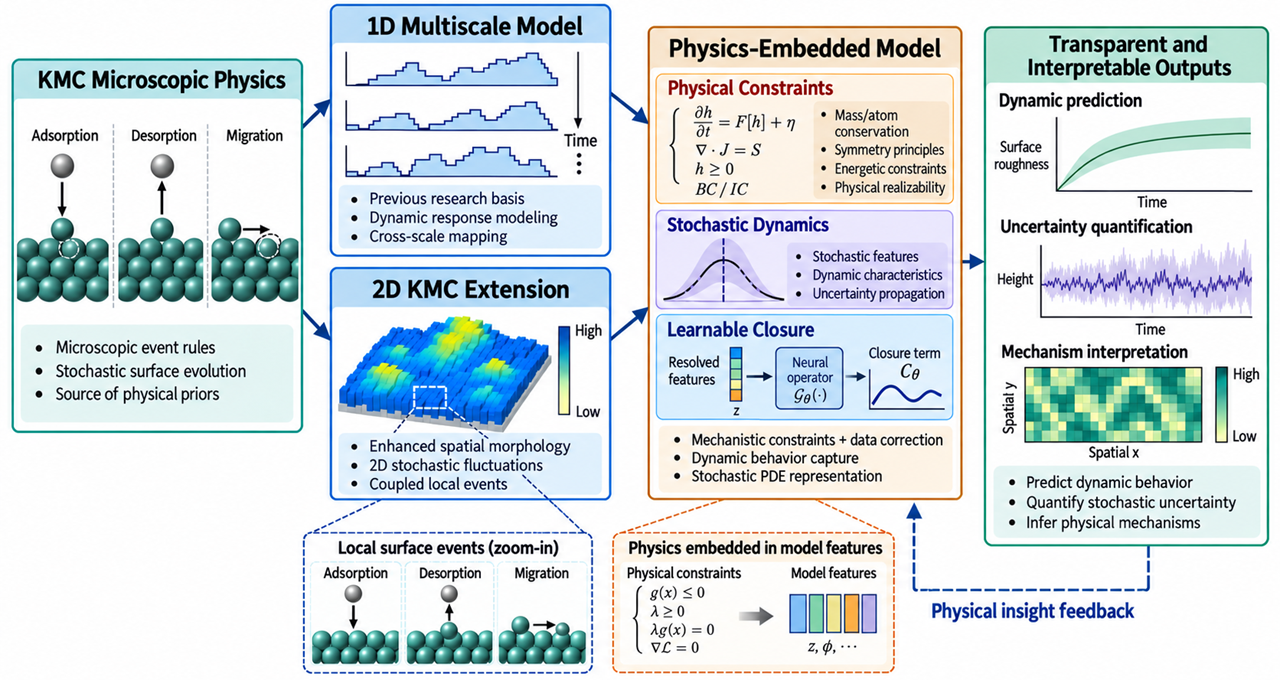
Develops multiscale modeling, simulation, and optimization methods for complex process systems, with a particular focus on linking reactor-scale transport phenomena with microscopic stochastic surface dynamics. The work integrates physics-based models, kinetic Monte Carlo simulation, stochastic process modeling, physics-informed machine learning, surrogate modeling, uncertainty quantification, and optimization-based control to describe how operating conditions influence material growth, morphology evolution, and product quality. These methods aim to build computationally efficient and interpretable models that support process understanding, operating-condition design, real-time optimization, and model predictive control for advanced manufacturing and thin-film deposition processes.